
The brain learns, the brain resists
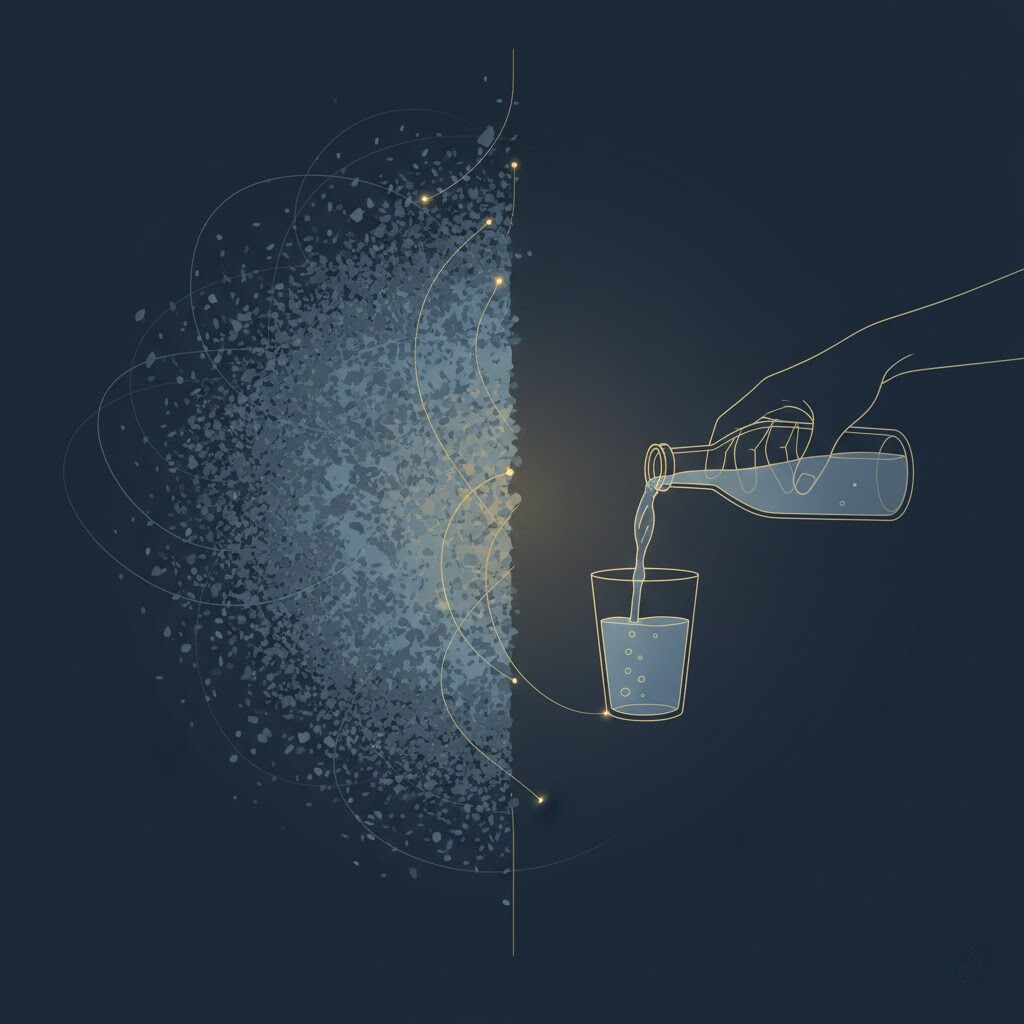
This post is the longest to write, because it covers the most bewildering period of the entire journey. The one where the electrodes are in place, the stimulation is on, and the brain has to adapt to a new signal it has never known. It's a period of concrete victories and inexplicable setbacks, often on the same day, sometimes within the same hour. The body getting better and the mind not keeping up. The gesture recovered and the vertigo settling in. Hope and doubt in permanent cohabitation.
The first weeks: the dystonia retreats
Starting in March-April, the dystonia began to retreat. In frequency and in intensity. The involuntary contractions of the neck and trunk, that background tension I described in the first post, diminished. Not disappeared — diminished. As if someone had finally found the volume knob and turned it down several notches. The glass of water test, the one neurologists use in consultations to evaluate myoclonus, came back negative. The myoclonus was still there, but dampened, as if someone had put a cushion between the erratic signal and the muscle. They no longer had the force to knock everything over.
And the most remarkable thing: it held. Even when stress crept up, even on bad days, the motor benefit remained stable. No fluctuations, no regression, no surprises. The stimulation was doing its job, silently, continuously.
March-April: the other side
This is where the story gets complicated, because this is where the brain started voicing its disagreement.
Starting in March-April 2025, something else set in. Not motor. Not related to the dystonia or the myoclonus. Something else. A cluster of symptoms I couldn't name, that the doctors couldn't really name either, and that no examination could explain.
A permanent sensation of swaying, as if on a boat that never stops. A feeling of descending in a plane, ears blocked, the pressure never equalizing. The world tilting, verticals no longer vertical, an imperceptible but constant drift in the perception of space. Flashes of light in the corner of my eye, dots appearing and disappearing. Dull, persistent pain around the eye sockets. A background of diffuse malaise, a kind of phantom fever without fever, a discomfort that didn't fit any box.
And in the evening, at the moment of falling asleep: the sensation of falling. Every evening. That jolt of the body that believes it's falling, when it's lying in a bed.
The most bewildering thing was that these symptoms had rules. Lying down, they disappeared. Immersed in a demanding task, focused on an intellectual problem, they faded. But standing up, idle, in a queue, sitting with nothing to do — it was a silent torment that nobody around me could see.
I'll say this clearly, because it's important: this was not in my head in the psychiatric sense. It was not anxiety, it was not psychosomatic, it was not imaginary. It was the brain adapting to pallidal stimulation, and during that adaptation, sending incoherent sensory signals. It's a documented phenomenon, known to specialists, but that doesn't make it any easier to live with when it's happening to you.
The April adjustment: partial relief
In mid-April, the team decided to lower the stimulation to 2 milliamps. The effect was almost immediate on certain symptoms: the errors of verticality disappeared, the pain around the eye sockets cleared up, the true vertigo stopped.
But a residue remained. A chronic perceptual fog, not intense enough to prevent you from living, too present to be ignored. The kind of malaise you can't show to others, can't explain simply, and that accompanies you from morning to evening without anything visible to justify it.
And all the while, the dystonia remained controlled. The motor benefit held. That's the most bewildering thing about this period: it was working, and at the same time something was wrong. Both were true at the same time, and you had to live with both.
June-July: the return of gestures
And right in the middle of this bewildering period, something beautiful happened. The retreat of the dystonia was a relief. But the return of gestures — that's something else. It's concrete, it's daily, it's the proof that something has truly changed.
It arrived in June-July, gradually. The gestures I had listed in the first post as examples of what the disease had stolen from me, I can now list as examples of what the stimulation has given back.
Brushing my teeth with one hand. Without the other hand to stabilize, without a compensation strategy, without thinking about it. Just the brush, the hand, and the movement that works.
Cutting my toenails. Alone. That ridiculous, mundane, insignificant gesture for the rest of the world, that I hadn't been able to do for years. Done.
Pouring water into a glass without setting the glass on the counter, without bracing the bottle, without anticipating the jolt. Standing, arm extended, like anyone else. The water goes in the glass.
These victories took time to arrive, much longer than the retreat of the dystonia. As if the brain first had to release the background tension before it could recover the precision of fine motor skills. But when they arrived, they stayed. And the contrast between the inexplicable vertigo and these recovered gestures made the period even stranger: the body was getting better, perception was getting worse, and you had to hold both at the same time.
The long crossing: May to August
For weeks, it's a plateau. The dystonia remains well managed, the myoclonus is bearable, and the perceptual symptoms don't budge. Neither worse nor better. A stable state that resembles waiting, except you don't know what you're waiting for, or when it will come, or even if it will come.
On top of that, there's a mechanical nuisance that has nothing to do with neurology: the cable. That famous cable under the skin of the neck, behind the ear, that pulls, that itches, that is hypersensitive to touch. No inflammation, no sign of infection, just this foreign presence that the body tolerates without accepting. A daily reminder that there's metal under the skin.
The etiological workup: everything is normal
Faced with these persistent perceptual symptoms, it was my father who suggested launching a complete etiological workup. My father is a doctor, and even though functional neurosurgery isn't his specialty, he had that practitioner's intuition that when something doesn't add up, you investigate, you rule things out, you don't leave a patient in limbo. Thanks to him, the workup was done between July and September, and thanks to that workup, we were able to rule out all peripheral causes and confirm that the problem was indeed central adaptation. ENT: normal. Vestibular exploration: normal. Ophthalmology: normal. Orthoptics: a slight convergence disorder, partially corrected through rehabilitation, but nothing that explained the scope of what I was experiencing.
Everything was normal. No examination found anything.
And that's where you have to accept something difficult as a patient: sometimes, the fact that everything is normal is the answer. It means the problem doesn't come from a peripheral organ, not from the inner ear, not from the eye, not from the vestibular nerve. It comes from the brain recalibrating the way it perceives the world, because the signal has been modified in a zone that is connected to everything. The GPi is not just a movement regulator — it's a neural crossroads linked to motor function, perception, and sensory integration. When you send continuous current into it, it takes time for everything else to adjust.
August-September: the fog lifts
It doesn't happen all at once. In late August, the vertigo becomes less frequent. Days without swaying appear, first occasionally, then more and more often. The perceptual fog lightens, slowly, without any identifiable cause, without any change in the stimulation. It's the brain doing its adaptation work, at its own pace, on its own schedule.
By early September, it's over. Truly over. The perceptual symptoms have disappeared. Not masked, not compensated — gone. The world has become stable again, verticals are vertical again, the ears have unblocked, and the falling sensations at bedtime have stopped.
The motor benefit, meanwhile, is still there.
Seven months. It took seven months for my brain to accept its new settings. Seven months of malaise without a simple explanation, without direct treatment, without certainty that it would pass. Neurologists call it adaptive plasticity. I call it crossing the desert.
What this period taught me
Nobody prepares you for this. They prepare you for the surgery, they prepare you for the surgical risks, they prepare you for the adjustments. But they don't prepare you for the idea that your brain is going to take months to digest what's been done to it, and that during those months, you're going to live with symptoms that nobody really understands, that tests don't show, and that you can't explain to the people around you.
If you're in this phase, if you're reading these lines with vertigo that nobody can explain and a workup that comes back normal, I'm telling you what I wish someone had told me: you're not crazy, you're not anxious, your brain is under construction. It takes time. It passes. And on the other side, there are the recovered gestures, the calmed dystonia, and a life that starts again.
To be continued.